Yusleep Review12 Things to Know About Taking YuSleep with Alcohol
12 Things to Know About Taking YuSleep with Alcohol
The short answer
It is not advised to combine YuSleep with alcohol without first checking the product label and speaking with a pharmacist or doctor. Alcohol is a sedative, and sleep products can add to its drowsiness in ways that are hard to predict. Alcohol also fragments sleep and can cause early waking, so the combination may not help you sleep better. If you have been drinking, avoid taking an extra sleep product until you have confirmed it is appropriate.
Some links on this site are affiliate links: if you buy through one, the site may earn a commission at no extra cost to you. More about this.
This guide is based on published specifications and what buyers report, not our own testing. Our editorial team compared the label information and common questions about mixing sleep aids with a nightcap, a glass of wine with dinner, or a late drink.
12 Things to Know About Taking YuSleep with Alcohol covers the points that matter most when you are deciding whether to take a sleep product after a drink. We chose them by asking which questions people most often need answered before bed, and which risks apply to sedating products in general rather than to any one brand.
Let's dive in.
Common Effects of Drinking Before YuSleep
| Effect | What it looks like |
|---|---|
| Added drowsiness | Sedating effects stack together |
| Early waking | Waking early and struggling to fall back asleep |
| Morning grogginess | Impaired alertness the next day |
| Fragmented sleep | Lighter, more restless second half of the night |
A closer look at each
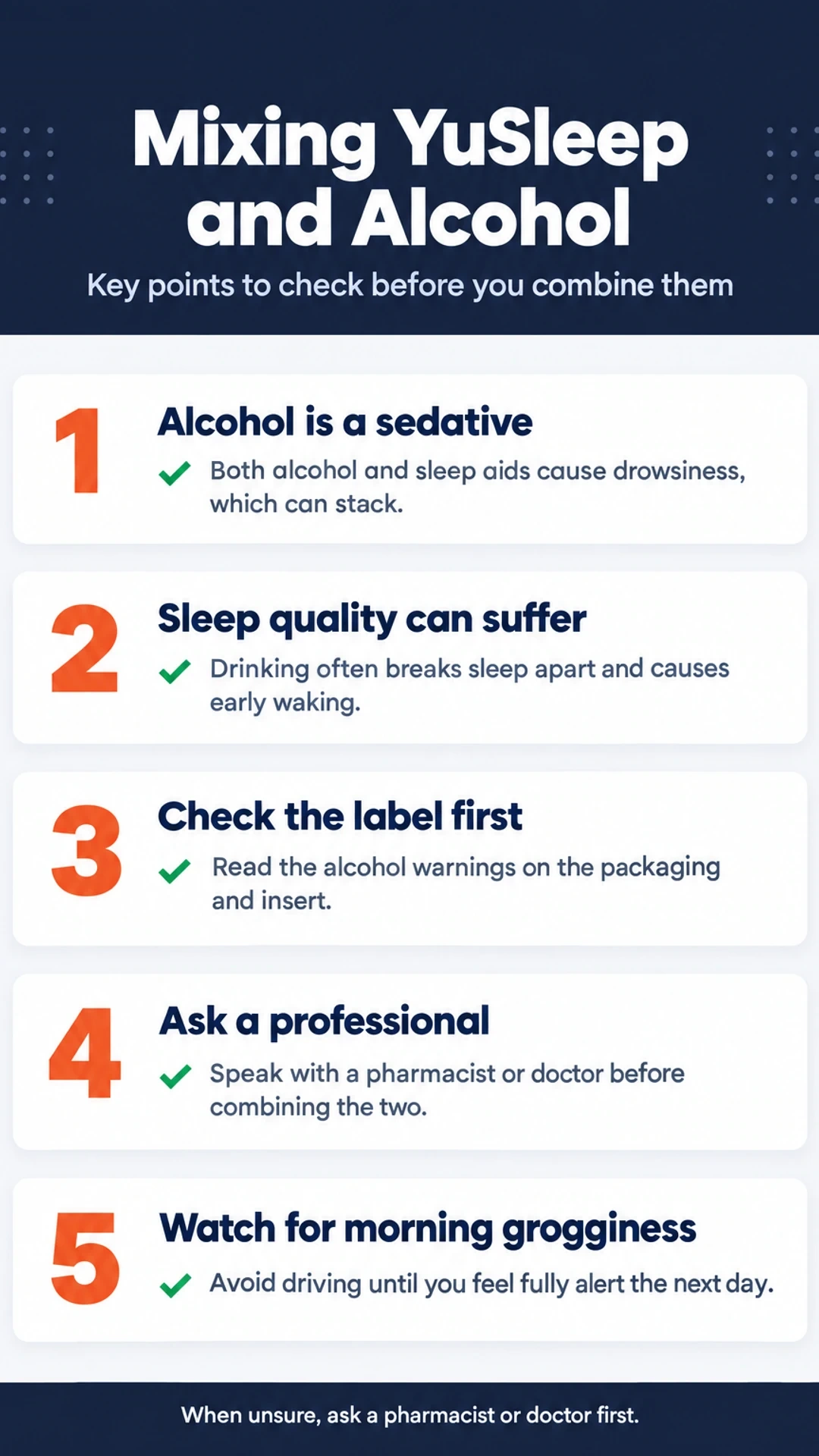
Alcohol Is a Sedative Too: Alcohol slows activity in the brain and makes people feel drowsy, which is why a nightcap feels relaxing. That same sedating effect is the core reason to be careful when combining it with any sleep aid. Two products that both calm the nervous system can add up in ways neither label describes on its own. Treat alcohol as an active ingredient in the mix, not a neutral one.
Why Alcohol Disrupts Sleep Quality: Even without any sleep product, drinking tends to hurt sleep quality. Alcohol can help you fall asleep faster, but it often breaks sleep apart in the second half of the night, leaving you lighter and more restless. Research on alcohol and sleep architecture, such as reviews in the journal Alcohol and Alcoholism, has described reduced REM sleep after evening drinking. The problem is not caused only by mixing products.
The Early-Waking Rebound: A common experience is waking earlier than planned after an evening drink, then struggling to get back to sleep. As the alcohol wears off in the early hours, rest becomes shallower and more broken up. Many readers report this early waking, and it can leave you feeling groggy the next morning. Keep it in mind before deciding how much to drink on a night you plan to use any aid.
What the Label Says About Alcohol: The authoritative source for your specific product is its own label and the insert that came with it. Check the warnings section for alcohol, since manufacturers state whether drinking should be avoided, limited, or is not addressed. If the label is unclear or you cannot find a statement, contact the manufacturer through the details printed on the packaging or on their official website before you combine the two.
Why Starting Low Matters: A sensible general principle is to start with the smallest amount that works and change one thing at a time. If you drink on a night you take a sleep aid for the first time, you have no clear picture of how your body responds to the combination. A lower amount and an unchanged drinking habit let you see how you feel before you assume the mix is fine, and it avoids stacking two sedating effects at once.
Factors That Change the Risk: The answer depends on your situation. How much you drink, how fast, your body weight, whether you have eaten, your age, your liver health, and whether you take other medicines all change how strongly alcohol and a sleep aid affect you. Someone who drinks a single glass with dinner faces a very different risk from someone having several drinks late at night, so look at your own circumstances rather than a general rule.
Morning-After Safety: Alcohol and sleep aids can both leave you groggy, so the next day is where the risk often shows up. Driving, operating machinery, or making important decisions can be impaired even when you feel awake. If you had a drink in the evening and used YuSleep, avoid driving until you are sure you are fully alert. Be cautious about heavy physical work or early starts too.
Other Sedating Products and Medicines: Alcohol, sleep aids, and many over-the-counter antihistamines or prescription medicines all add to drowsiness, and the effects stack. A product that feels mild on its own can become much stronger with a glass of wine on top. Check the labels of anything else you take before the evening. Our separate page on other sleep aids and medicines covers those specifics in more detail.
Signs the Combination Is a Problem: Warning signs include needing alcohol to fall asleep, waking with memory gaps, feeling confused or unsteady on your feet, or needing more of either to get the same effect. If you notice these, or if you are using both most nights, it is time to stop combining them. Speaking to a doctor or pharmacist is a sensible next step, and a support service can help if drinking feels hard to control.
Plan Alcohol-Free Nights: Choosing a few nights each week to skip alcohol, and keeping YuSleep for nights you have planned, makes the combination easier to avoid. Set a cutoff time for drinks, such as at least three hours before bed, and keep water by the bed. A non-alcohol evening routine, like a warm shower or reading, helps you wind down without reaching for a drink.
Questions to Ask a Pharmacist or Doctor: Bring this list to your appointment. Is it safe for me to drink any alcohol while taking YuSleep, and if so, how much? How long should I wait between a drink and a dose? Does my other medication add to the risk? What should I do if I feel drowsy the next morning? Are there safer sleep options for me? Write down the answers so you can refer to them later.
When to Seek Medical Help Urgently: Call emergency services or go to the nearest emergency department if someone is very hard to wake, has slow or irregular breathing, is confused or unresponsive, has a seizure, or has taken more than the label directs along with alcohol. Do not wait to see if symptoms pass. If you are unsure whether a situation is an emergency, treat it as one and get help straight away.
Frequently asked questions
What are the main factors that contribute to alcoholism?
Alcohol use disorder rarely has one cause. Genetics account for a substantial share of risk, and family history matters. Other contributors include starting to drink at an early age, chronic stress, trauma, mental health conditions such as depression or anxiety, easy access to alcohol, and social settings where heavy drinking is normal. These factors often combine.
When to take someone to the hospital for alcohol poisoning?
Call emergency services right away if the person is unconscious or cannot be woken, has slow or irregular breathing, has blue or pale skin, vomits while unresponsive, or has seizures. Do not leave them alone to sleep it off, and do not give them coffee or try to make them vomit. Turn them on their side to protect the airway while you wait.
How to control alcohol addiction?
Control usually starts with honest tracking of how much and how often you drink, then setting firm limits and removing alcohol from the house. Many people find support through a doctor, a counselor, or a mutual support group. Medications exist for some people with dependence. Stopping suddenly after heavy daily drinking can be dangerous, so get professional medical advice before quitting.
What BAC is alcohol poisoning?
There is no single exact number, but a blood alcohol concentration of about 0.30 percent or higher is commonly associated with serious risk, and levels above 0.40 percent can be life threatening. Even lower levels can be dangerous, especially with fatigue, medications, or rapid drinking. Breathing, consciousness, and responsiveness matter more than any number, so treat any severe symptoms as an emergency.