Yusleep ReviewDoes YuSleep Show up on a Drug Test? What Screens Look for and What to Do
Does YuSleep Show up on a Drug Test? What Screens Look for and What to Do
The short answer
YuSleep is unlikely to show up on a standard drug test. Common urine panels target substances such as amphetamines, cocaine, opiates, cannabis and benzodiazepines, and melatonin is not usually on that list. The real risk comes from prescription sedatives and from supplements contaminated with undeclared drugs, so check the ingredient list and tell the testing lab about everything you take.
Some links on this site are affiliate links: if you buy through one, the site may earn a commission at no extra cost to you. More about this.
- What standard panels screen for: the drug classes most workplace and sports tests look at, and why a sleep aid usually falls outside them.
- Where the real risk sits: prescription sedatives, and supplements that may contain drugs the label does not declare.
- How to read the label: what to look for in the ingredient list and why the exact product name matters.
- What to tell the lab: how to disclose everything you take, and what a medical review officer will typically ask.
- What to do if you are worried: practical steps before a test, and who to ask when the answer is unclear.
If you are reading this because a test is coming up, you probably want a straight answer without the jargon. That is what you will get here. We know the worry is real: a test result can affect a job, a team place or a licence, and it is hard to know what a sleep supplement might trigger. We want to help you move from guessing to a clear plan.
This guide is based on published specifications and what buyers report, not our own testing. We explain what standard drug screens look for, which products and ingredients deserve a closer look, and how to talk to the testing lab or a medical review officer so that your medicines and supplements are recorded accurately. We also point you to related pages in this hub on ingredients, safety and dosing for further detail.
What Drug Tests Actually Look For
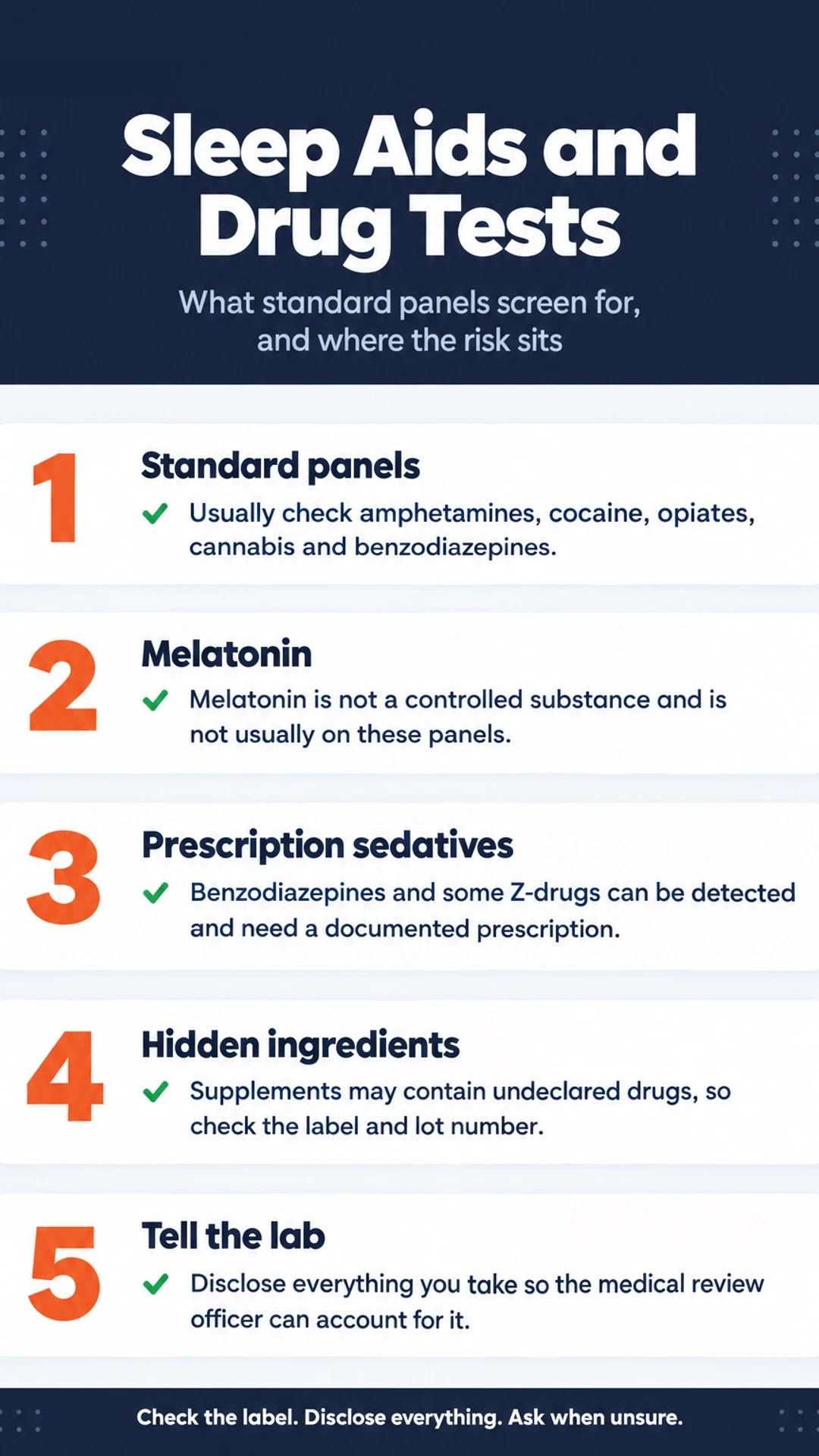
Most workplace and pre-employment drug screens use a urine test with a standard panel. The two you will see most often are the 5-panel and the 10-panel. A 5-panel usually checks for amphetamines, cocaine, opiates, phencyclidine (PCP), and marijuana (THC). A 10-panel adds drugs such as barbiturates, benzodiazepines, methadone, methaqualone, propoxyphene, and sometimes tricyclic antidepressants. Each class is screened by its own immunoassay, and the lab only reports a result for drugs on the panel the employer ordered.
Sleep supplements are not standard targets. Dietary supplements, including melatonin-based products, are not on these panels, and a routine screen is not designed to detect them. That said, the label is the best place to start. Check the ingredient list for any sedating prescription-type compound, since a sold product's full formula matters more than its category name.
Extended panels and specialized tests work differently. A lab may run an expanded panel with more drug classes, or a confirmatory test such as gas chromatography or mass spectrometry, which identifies specific compounds rather than screening for a class. Hair testing covers a much longer window than urine. If you have concerns about a particular test, ask the employer or testing site which panel is being run, and report any medication or supplement you take so the review officer can account for it. A small step like that can prevent confusion later.
Does Melatonin Show Up on a Drug Test?
Melatonin is a hormone your brain makes naturally to regulate the sleep-wake cycle, and it is not a controlled substance. That matters for drug screening. Standard workplace and sports panels look for substances such as amphetamines, cannabinoids, opioids, benzodiazepines and cocaine metabolites. Melatonin is not on those panels, so an ordinary drug test will not normally flag it.
In principle, a specialized laboratory assay could detect melatonin or its metabolites in urine or blood. That kind of testing is uncommon outside research or clinical settings, and it is not what employers or sports bodies order by default. If you are worried, the most useful step is to check what you are actually taking.
Formulas vary by product, so check the label rather than assuming. Look at:
- The full ingredient list, including any added herbs, amino acids or sedating compounds
- The melatonin amount per dose and whether it is immediate or extended release
- Any "proprietary blend" that hides individual ingredient amounts
- Whether the product is a dietary supplement or a food, since regulation and labeling differ
Some dietary supplements have been found to contain ingredients not listed on the label, so buy from a seller that publishes independent testing or a third-party certification mark. If you compete under an anti-doping code, ask your sport's governing body whether a specific ingredient is restricted before you take it.
Sleep Aids That Can Trigger a Positive Result
Most people asking whether a sleep product will show up on a drug test are really asking about a handful of medication classes. Standard workplace and sports panels are designed to detect specific drugs of abuse, and sleep-related medicines only matter when they fall into one of those targets or when the lab runs an expanded panel.
Prescription sedatives that some panels detect
Benzodiazepines and Z-drugs are the sleep medicines most likely to appear. Benzodiazepines (such as temazepam or lorazepam) are prescribed for insomnia and anxiety, and many standard immunoassay panels include a benzodiazepine screen. Z-drugs, such as zolpidem, are not always caught by the basic screen, so a lab may need a confirmatory test to identify them. If a prescribed sedative is detected, the lab's medical review officer usually checks the prescription before a result is reported as a concern.
Antihistamine sleep aids
Sleep aids built on diphenhydramine or doxylamine are generally not on standard panels. Buyers of these products rarely have a positive result for that reason, though a specialized lab could test for them on request.
Why a documented prescription is handled differently
A medication taken under a valid, documented prescription is treated differently from an unlisted product. The medical review officer can verify it, which is why keeping your prescription details ready matters. An unlisted or loosely labeled sleep product carries no such record, so it is harder to explain if a concern is flagged.
If you are worried, check the substance list with the testing body before your test. Keep the box and label. Ask your prescriber or pharmacist for a short note on your medication, and bring it to the review.
Hidden Ingredients and Contamination Risk
For most people, the realistic way a supplement causes a positive drug test is not the listed ingredients at all. It is an ingredient that never appeared on the label. The FDA has issued repeated public warnings about sleep aids and bodybuilding products that were found to contain undeclared drug ingredients, including prescription sedatives and stimulants. If a product you buy is sold as a natural or dietary aid but contains something its label omits, a screen can flag it even though you took exactly what the box said.
Contamination can also happen during manufacturing, when equipment or raw materials are shared with other products. That is why the same brand can behave differently from one batch to the next.
Can I trust a third-party certification mark?
Certification marks from independent testing organizations can help, but they are narrower than they sound. A mark usually means the product was checked for identity, strength, purity and sometimes heavy metals or contaminants in the batch sampled. It does not guarantee that every bottle is identical, and it does not mean the product is free of substances that a sport or employer panel screens for. Read what the mark actually covers before you rely on it.
What to check if a test is coming up
- Find the manufacturer and lot number printed on the package, and record them.
- Look up whether that lot was independently tested, and what was tested.
- Avoid products with proprietary blends that hide amounts.
- Stop using any product with doubts, and tell the testing body about it.
If a result comes back positive, report the product and its lot number to the testing authority straight away, since a documented supplement can change how the result is handled. YuSleep is one option among many, and the same checks apply to any product sold for sleep.
Before a Workplace or Sports Test: A Practical Checklist
If a drug test is coming up, the most useful thing you can do is get organised before the day arrives. We cannot say whether YuSleep would or would not appear on any particular screen, because that depends on the test panel, the lab and the ingredients in the specific product you buy. What you can control is how well you document and disclose what you take.
Start by reading the full label and writing down every product and dose you take. That includes sleep aids, dietary supplements, vitamins, herbal products and anything prescribed. Keep the packaging or a photo of each label. Small details like the exact ingredient list and serving size are what a reviewer or doctor will ask for first.
Tell the collector or lab about supplements and prescriptions before the test, not after a result comes back. Most collection sites have a form for this. A disclosed product is a routine matter; an undisclosed one can cause delays and confusion.
Ask your doctor or pharmacist to review your medicines and sleep routine. They can check for interactions with what you take, flag anything that concerns a screen, and help you decide whether a product is worth keeping during the test window. Do not stop a prescribed medicine on your own.
For sports, check the governing body's prohibited list and any athlete support service before you use any product. Many federations run a helpline that will confirm whether an ingredient is banned. Supplement safety in sport is a real concern, so treat that check as essential, not optional.
How a Positive Result Is Reviewed and What Documentation Helps
A positive screen is not always the final word. In many workplace and sports testing programs, a laboratory result that comes back above the cutoff goes to a Medical Review Officer, usually a licensed physician who is trained to interpret drug tests. The MRO will typically contact the donor, ask about current medications and supplements, and check whether there is a legitimate explanation for what was found. That review step is where a lab result gets put in context, so it is worth knowing it exists before you assume a screen is final.
Documentation is what makes that review useful. If you think a product you take could affect a result, keep the things that show exactly what you took:
- The product label or a photo of it, showing the full ingredient list and lot number
- Purchase receipts or order confirmations with dates
- Prescriptions and pharmacy labels for any medicines you take
- A dated list of anything else you used in the days before the test
Keep in mind that no article can tell you whether a specific product will or will not trigger a particular screen. Test panels differ, cutoffs differ, and the contents of a product can vary from one batch to another. The most useful thing you can do is check what the product actually contains, and if you have concerns, talk to your MRO, your prescriber or a pharmacist before the test rather than after.
Documents to keep for a review
| Document | Why it helps |
|---|---|
| Product label or photo | Shows full ingredient list and lot number |
| Purchase receipts or order confirmations | Shows dates of purchase |
| Prescriptions and pharmacy labels | Lets the review officer verify medicines |
| Dated list of recent products | Accounts for what was taken before the test |
Frequently asked questions
What supplements will fail a drug test?
Most supplements will not fail a standard drug test, because those tests look for drugs of abuse such as THC, opiates, amphetamines, cocaine and benzodiazepines. The exceptions are products that contain those drugs or a close chemical relative, which some adulterated or mislabeled products do. Sports testing is different: a supplement contaminated with a banned stimulant or anabolic agent can cause a positive result for an athlete.
Is Yu sleep legit?
What we can do is check the label, the listed ingredients and doses, and the manufacturer's stated claims against published information about those ingredients. Look for a third-party testing certificate and a clear business address before buying, and treat vendor claims as claims until independently verified.
Will I fail a drug test if I take melatonin?
No. Melatonin is a hormone your body makes, and it is not on the panels used in standard workplace drug tests. It is not a controlled substance in most countries. The main risk is a supplement that is mislabeled or contaminated, so choosing a product with independent batch testing reduces that concern.
Will you fail a drug test if you take ashwagandha?
Ashwagandha is a botanical herb and is not tested for in standard drug screens, so it will not cause a failed workplace test on its own. Some sports bodies monitor specific substances, and a contaminated or spiked product is the main way a banned substance could appear. If you are tested for sport, check your governing body's guidance and choose products with third-party certification.
What should I do if I have a drug test coming up and I take a sleep supplement?
Read the full ingredient list and confirm each ingredient is not a banned or controlled substance for your test. Tell the testing administrator about all supplements you take, since they may ask for the label. If you are unsure, contact the test provider or your sports body before the test rather than guessing afterward.
Wrapping up
Whether YuSleep shows up on a drug test depends on its exact ingredients, not on the fact that it is a sleep product. Standard workplace screens look for drugs of abuse, which typical sleep supplements do not contain. For sports testing, check the label and third-party certification, since contamination is the real risk. What has your experience been with sleep supplements and testing? Share it in the comments.