Yusleep ReviewDoes YuSleep Cause Morning Grogginess? How to Time It Around Your Wake-Up
Does YuSleep Cause Morning Grogginess? How to Time It Around Your Wake-Up

The short answer
YuSleep is marketed by its vendor as not causing morning grogginess, but no product can promise this for everyone. Next-day grogginess depends mainly on the total melatonin dose, when you take it relative to wake-up, and how your body processes sedating ingredients. Taking the product too late, or at a higher dose than you need, is the most common reason people wake up groggy.
Some links on this site are affiliate links: if you buy through one, the site may earn a commission at no extra cost to you. More about this.
- Why grogginess happens: the sleep-related mechanisms that can carry over into the morning
- Timing it against your alarm: how many hours before wake-up to take it, and why that window matters
- Dose and the next-day effect: how a dose that is too high can linger, and how to check whether yours is
- Ingredients that can add to drowsiness: what to look for on the label besides melatonin
- Signs it is the product, not something else: how to tell a timing or dose problem from other causes
- What to adjust first: a practical order of changes to try before deciding the product is not for you
Waking up foggy after a night's sleep is frustrating, especially when you took something specifically to sleep better. You may have assumed the grogginess is just how your body is, or that you need more rest. Often it is a fixable mismatch between when you take a product and when you have to get up.
This guide is based on published specifications and what buyers report, not our own testing. Our goal is to help you work out whether timing, dose or something else is the likely cause, so you can change the right thing rather than guessing. We also point to related pages in this hub where the details of dosing, ingredients and side effects are covered more fully.
Does YuSleep Cause Morning Grogginess?
The vendor's own materials state that YuSleep does not cause morning grogginess. Those are the publisher's claims, and we have not verified them through independent testing. Buyer reports are more mixed. Some people say they wake up feeling clear, while others mention mild grogginess, particularly after taking a higher dose or going to bed later than usual. Grogginess after a sleep aid is a common complaint across the category, and it often depends on how much you take, when you take it, and how long you actually stay asleep.
Several factors tend to decide whether you feel groggy:
- The dose. Doses at the upper end of a product's range are more likely to leave you heavy in the morning than the lowest suggested amount.
- Timing. Taking the product too close to your alarm, or with too little time before you need to be alert, leaves less room for it to wear off.
- Total sleep. Fewer hours in bed can leave you groggy regardless of what you take.
- Your own sensitivity. Individual response varies, and no product can promise the same effect for everyone.
Before you buy, check the label for the active ingredients and the suggested dose, and read the full product page for any guidance on timing. If you have sleep or health concerns, speak with a qualified clinician. For how to time a dose around your wake-up, see our timing guide.
What Causes Morning Grogginess After a Sleep Aid
Feeling heavy or foggy after a sleep aid usually has more than one cause, and it helps to separate them before you decide what to change.
The first is sleep inertia. Waking from deep sleep, or in the middle of a sleep cycle, feels much heavier than waking from light sleep. Any sleep aid that helps you fall asleep or deepens your sleep can make a wake-up from that deeper stage harder, even if the product itself is not sedating in the morning.
The second is residual activity from the ingredients. Some ingredients act on the same receptors or hormones that regulate sleep, and their effects can outlast the hours you spent asleep. How strong and how long this is depends on the specific ingredients and their amounts, which you can check on the label and in our ingredients breakdown.
The third is dose and timing. A higher dose, or taking the product late in the evening, can extend the period when your body is still processing it. A dose taken closer to bedtime leaves less time for it to clear before you need to be alert.
Reading the label carefully, and noting how much you took and when, makes it much easier to tell which of these is behind your own morning fog.
Common Causes of Morning Grogginess
| Cause | Why It Matters |
|---|---|
| Sleep inertia | Waking from deep sleep feels heavier |
| Residual ingredient activity | Effects can outlast hours asleep |
| High dose | Body is still processing it longer |
| Late dosing | Less time to clear before waking |
How Melatonin Dose and Timing Affect Next-Day Alertness
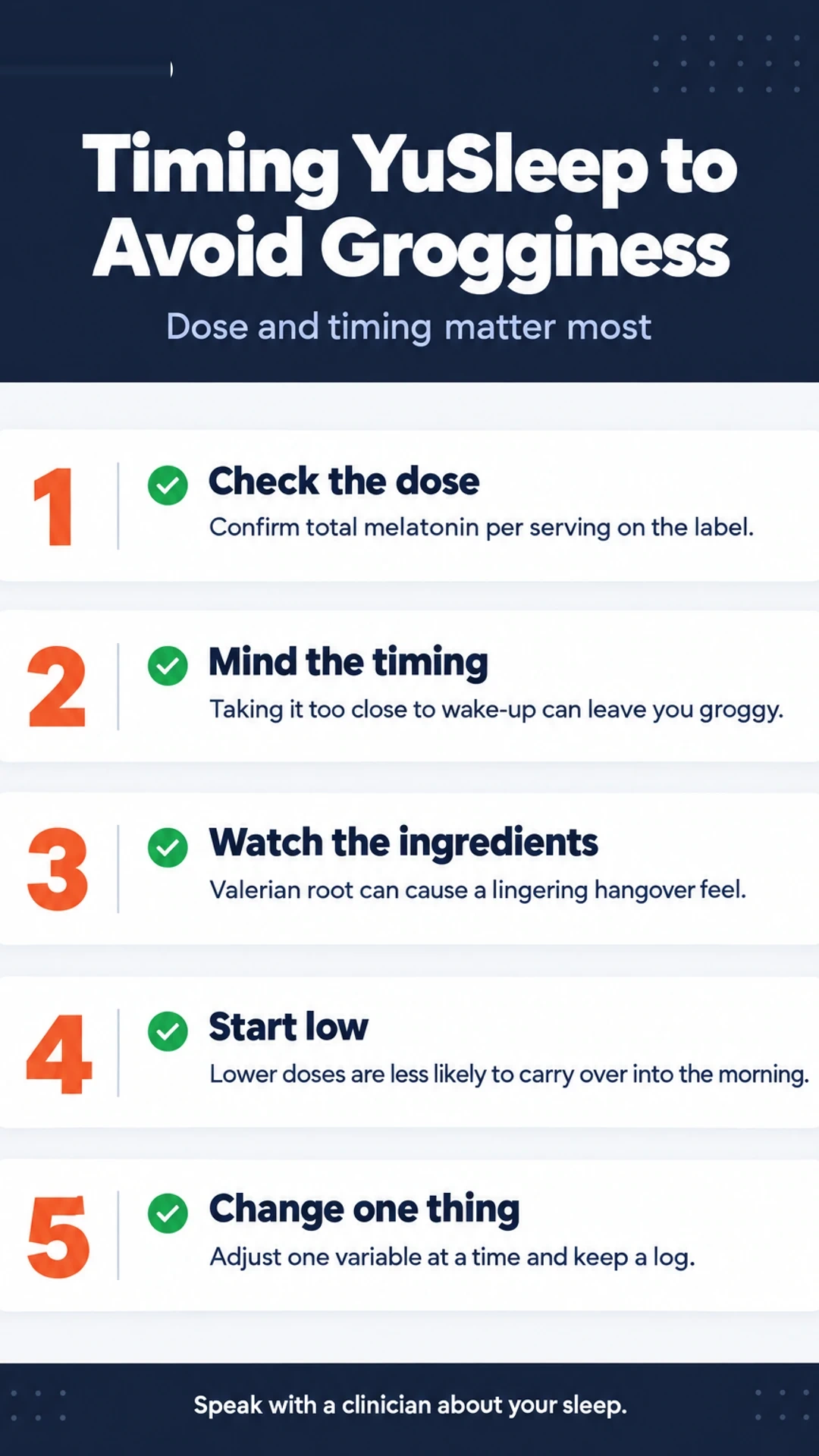
Morning grogginess after a sleep supplement is one of the more common complaints, and it usually comes down to two things: how much melatonin is in each serving, and how close that dose sits to your wake-up time. The timing guide covers when to take it at night. This section looks at why a dose can carry over into the morning.
Start with the label. Check the total melatonin per serving in milligrams, not just the headline claim on the front of the package. Some products list a single number prominently but contain more than one dose per serving, or use a per-capsule amount that differs from what the marketing suggests. The ingredients panel on the YuSleep label is the place to confirm the figure, and the full content listing is worth reading before you decide on a dose.
Taking a dose too close to wake-up is a frequent cause of grogginess. Melatonin signals to your body that it is night, so if you take it shortly before you need to be alert, the signal can linger. Many people take it some hours before their target sleep time, but the right gap depends on the product label and on advice from a clinician who knows your health history. Treat any specific number of hours as something to confirm, not something to assume.
Lower doses are generally a reasonable starting point. A smaller amount is less likely to carry over into the morning, and you can adjust from there if it does not help you fall asleep. Lower doses are also easier to judge for yourself, since you can see how a given amount affects your evening and your next day before changing anything.
Checking the Label Before You Buy: Ingredients That Can Cause Carry-Over
Morning grogginess after a sleep supplement usually comes down to what is in it, how much, and when you take it. This section gives you a way to judge the risk from the ingredient list alone.
How much melatonin is in each serving?
Start with the melatonin content per serving and the serving size. Melatonin doses in sleep supplements range widely, and a higher dose is more likely to leave you feeling heavy the next morning, especially if you take it late or wake earlier than usual. Check whether the label states the amount per capsule or per scoop, and whether a "serving" is one unit or two. The number that matters is the total you swallow in one sitting.
Which other sedating ingredients are listed?
Look past melatonin. Common additions include:
- Valerian root, a botanical often associated with drowsiness, sometimes described as causing a lingering "hangover" feel.
- Chamomile and lemon balm, usually mild, with less carry-over for most people.
- Glycine and L-theanine, amino acids generally considered gentle, though their effects vary between individuals.
- Magnesium, which is not sedating in the same way but is often added for relaxation; check the elemental amount and form on the label.
The more sedating ingredients a blend contains, the harder it is to predict how you will feel the next day.
Does the label warn about alertness or driving?
Read the warnings carefully. Look for statements about driving, operating machinery, or avoiding activities that need full alertness. A warning of this kind tells you the manufacturer expects carry-over and wants you to plan around it. Its absence does not prove the product is safe for the morning, but a clear warning is a useful signal to act on.
Ingredients That Can Add to Drowsiness
| Ingredient | Typical Effect | Carry-Over Risk |
|---|---|---|
| Valerian root | Drowsiness | Can cause lingering hangover feel |
| Chamomile | Mild relaxation | Usually low |
| Lemon balm | Mild relaxation | Usually low |
| Glycine | Gentle calming | Varies between individuals |
| L-theanine | Gentle calming | Varies between individuals |
| Magnesium | Relaxation | Not sedating in the same way |
How to Reduce or Avoid Morning Grogginess
If you wake up foggy after taking a sleep supplement, the timing of your dose is the first thing to look at. Most people who report next-day grogginess are taking the product too close to the time they need to get up, so the goal is to find a gap that lets you wake clearly. Change one thing at a time and keep a short log so you can see what actually helped.
Track your own response. For a week or two, note your bedtime, the time you took your dose, your wake-up time, and how you felt on a simple scale from 1 to 5 after getting up. Patterns show up quickly in a written log and are hard to see from memory.
Adjust timing in small steps. If you are groggy, try taking your dose 30 minutes earlier, not hours earlier. Keep the change until you see whether grogginess eases, then adjust again if needed. Check the label for the directions on how long before bed to take it, and do not exceed the stated amount.
Get light soon after waking. Daylight or bright light in the first hour after getting up helps signal your body that the day has started. Open the curtains, step outside for a few minutes, or sit near a window while you have your first drink.
Keep your wake-up time consistent. A regular wake time, including on weekends, makes it easier for your body to settle into a rhythm and reduces the chance that a late wake-up cuts your sleep short.
Know when to stop and get advice. Speak to a clinician or pharmacist if grogginess persists for more than a few days, if it affects your ability to drive or operate machinery, or if you notice a headache or other side effects that get worse. Your safety comes first, and a professional can check whether the product suits you. You can read more on the label at yusleep.com.
When Morning Grogginess Is a Sign to Seek Advice
Some grogginess after waking is normal, especially if you have had a short night or woke during a deep stage of sleep. The question is whether it is an occasional blur or a pattern that is getting in the way of your day. This is a sleep supplement, so if the grogginess keeps coming back, treat it as information about your sleep and not just a timing problem to adjust.
Talk to a doctor or pharmacist promptly if you notice any of the following:
- Grogginess that lasts into the afternoon on most days
- Grogginess that affects your work, concentration or ability to drive safely
- Grogginess together with headache, dizziness, confusion or unusual drowsiness
- Any sign of an allergic reaction, such as rash, swelling or difficulty breathing
Can I still take YuSleep if I take other medicines, or if I am pregnant or planning a child?
These questions matter and deserve a proper answer from a clinician who knows your history. Check the full label on the product page for stated cautions, and look at the related pages in this hub on interactions, pregnancy and breastfeeding, and use by young people. Do not assume a supplement is harmless alongside prescription medicines. A pharmacist can check your specific combination quickly.
Frequently asked questions
Does valerian root make you groggy in the morning?
Valerian can leave some people feeling drowsy the next morning, especially after a higher dose or when taken late at night. Sensitivity varies a lot between people. If you notice heaviness or a slow start after using a valerian-containing product, try taking it earlier in the evening or at a lower amount, and check the label for the recommended dose.
Is there a sleep aid that doesn't make you groggy the next day?
No sleep aid is guaranteed to avoid next-day grogginess for everyone. Ingredients with shorter-acting effects and lower doses are less likely to carry over, and timing matters as much as the ingredient. Taking a product early enough before bed, keeping to a consistent schedule, and noting how you feel the next morning will tell you more than any label claim.
How to beat morning grogginess?
Start with consistent sleep and wake times, get light exposure shortly after waking, and drink a glass of water before coffee. If you took a sleep aid, allow enough time between your last dose and your alarm, which is often several hours. Short, gentle movement can also help clear the fog. If grogginess persists for many days, talk with a healthcare professional.
Can melatonin cause me to wake up groggy?
Melatonin can cause morning grogginess in some people, particularly with higher doses or when taken too close to waking. Many people also feel groggy simply because the dose was taken late. Lowering the amount, taking it earlier in the evening, and allowing enough hours before your alarm often reduces the effect. Check the label for guidance on dose and timing.
Does YuSleep cause morning grogginess?
The product's published specifications and vendor claims do not say whether it causes grogginess, and buyer reports on this point vary. Some people may feel drowsy the next morning, especially if they take it late or combine it with other sleep aids. Whether it affects you depends on your dose, timing and sensitivity, so paying attention to how you feel is the most practical check.